
The Hidden Thread: a hand-printed book for Roberto Novello
A hand-printed book for a goldsmith who thinks of luxury as a form of time. How five values became gold, paper, touch and story, with no AI and a map of cultural associations.
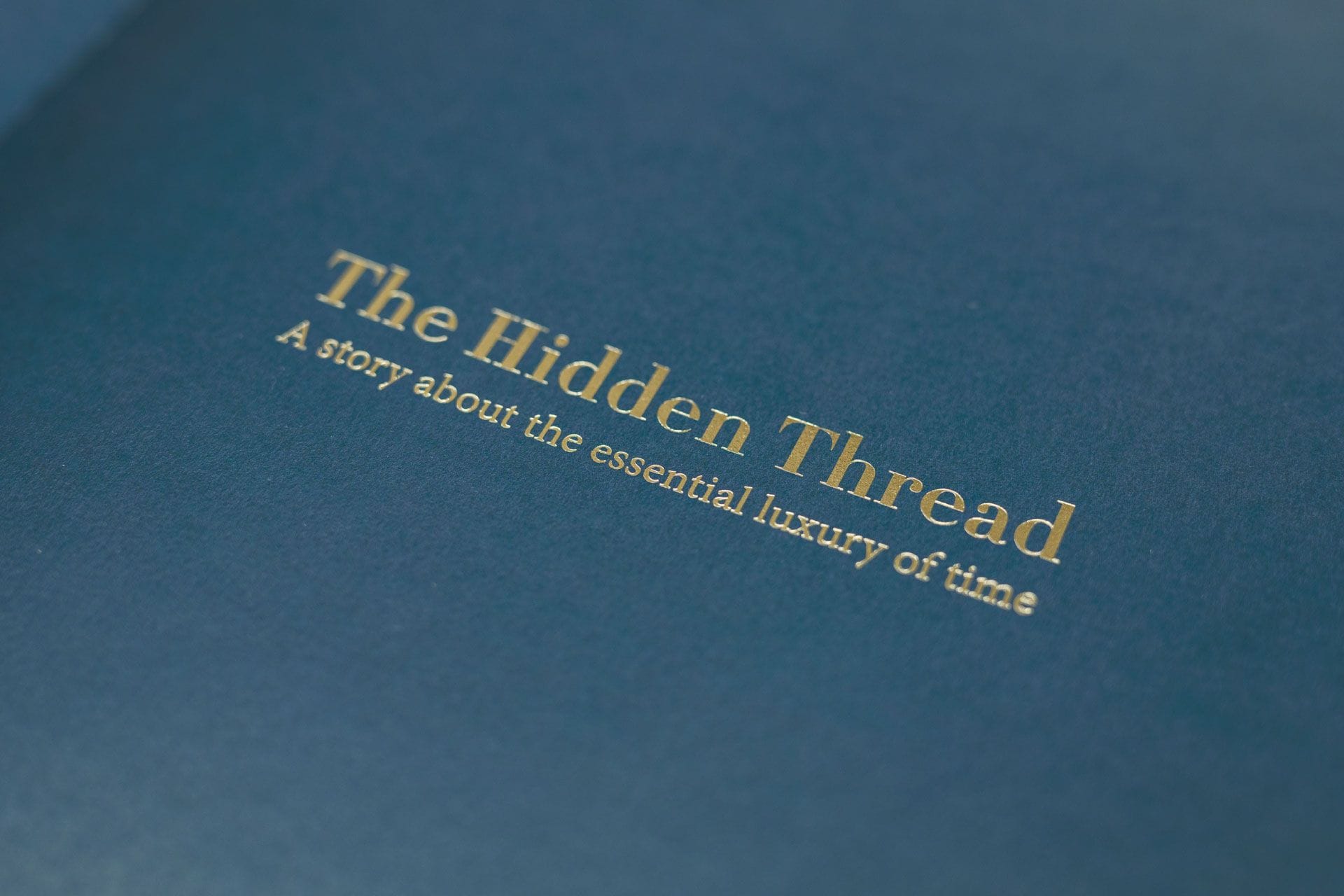
Case study · Roberto Novello
A book about the luxury of time, made slowly: printed and bound by hand, in gold on blue.
- Client
- Roberto Novello, handcrafted 18kt gold eyewear and jewellery
- With
- Onymous Studios, art direction and photography
- Method
- A map linking every stimulus to a sense, a meaning and a value.
Roberto Novello, an Italian brand of handcrafted 18kt gold eyewear and jewellery founded in 2000 in Sandrigo and known for bulinatura, hand engraving with a burin, asked for something exclusive. He gave the word an unusual meaning: “something no one else has”.1
The answer was a book that exists in a few copies, printed and bound by hand, in which his biography is told as a fairy tale in five allegories of luxury: Thought, Faith, Matter, Heritage and Time. Its subtitle states the thesis: “A story about the essential luxury of time”.
The brief: what does “exclusive” mean to a goldsmith?
In luxury, exclusive usually means scarce or expensive. Scarcity does raise perceived value,2 but a limited edition of an ordinary book would have answered only half of the brief. The other half was meaning: an object that would belong only to Novello and say who he is, readable with the eyes and with the hands.
Research: a dinner instead of an interview
The text did not come from a formal interview but from a conversation over dinner, and it keeps what a brand portrait usually removes: Novello’s ambiguities and weaknesses, alongside his strengths.1 Research supports the choice. Credibility and integrity are among the traits people read as authentic,3 and a small amount of negative information, after positive information, can make the overall judgement more favourable.4 A portrait without any flaw reads as advertising.
Synesthetic Design: the association map
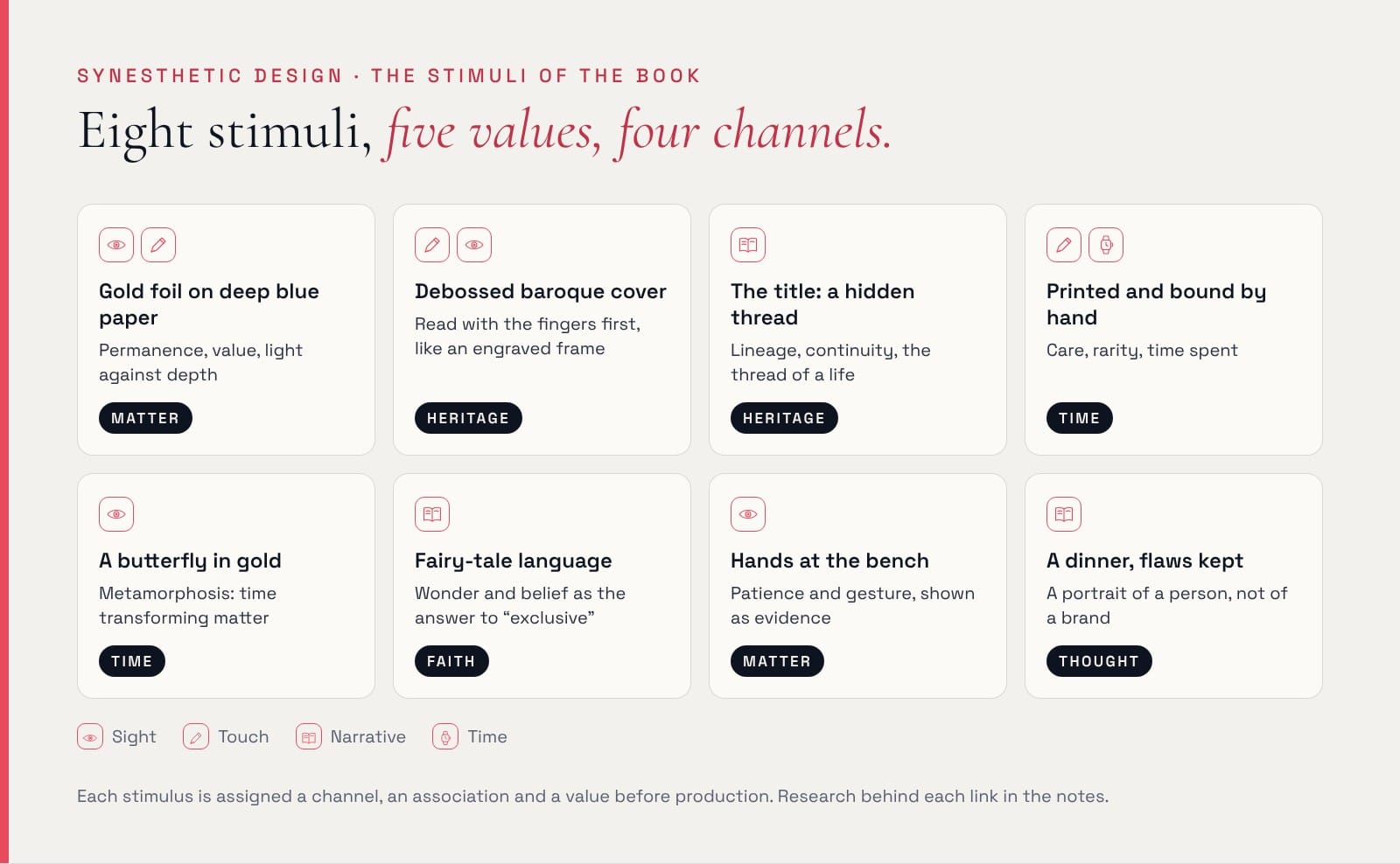
With Synesthetic Design, the design method Siderius works with, every stimulus is described by the sense through which it acts, by the associations it activates and by the value it serves. For The Hidden Thread the map links eight stimuli to the five values.
Why it works: reading with the hands
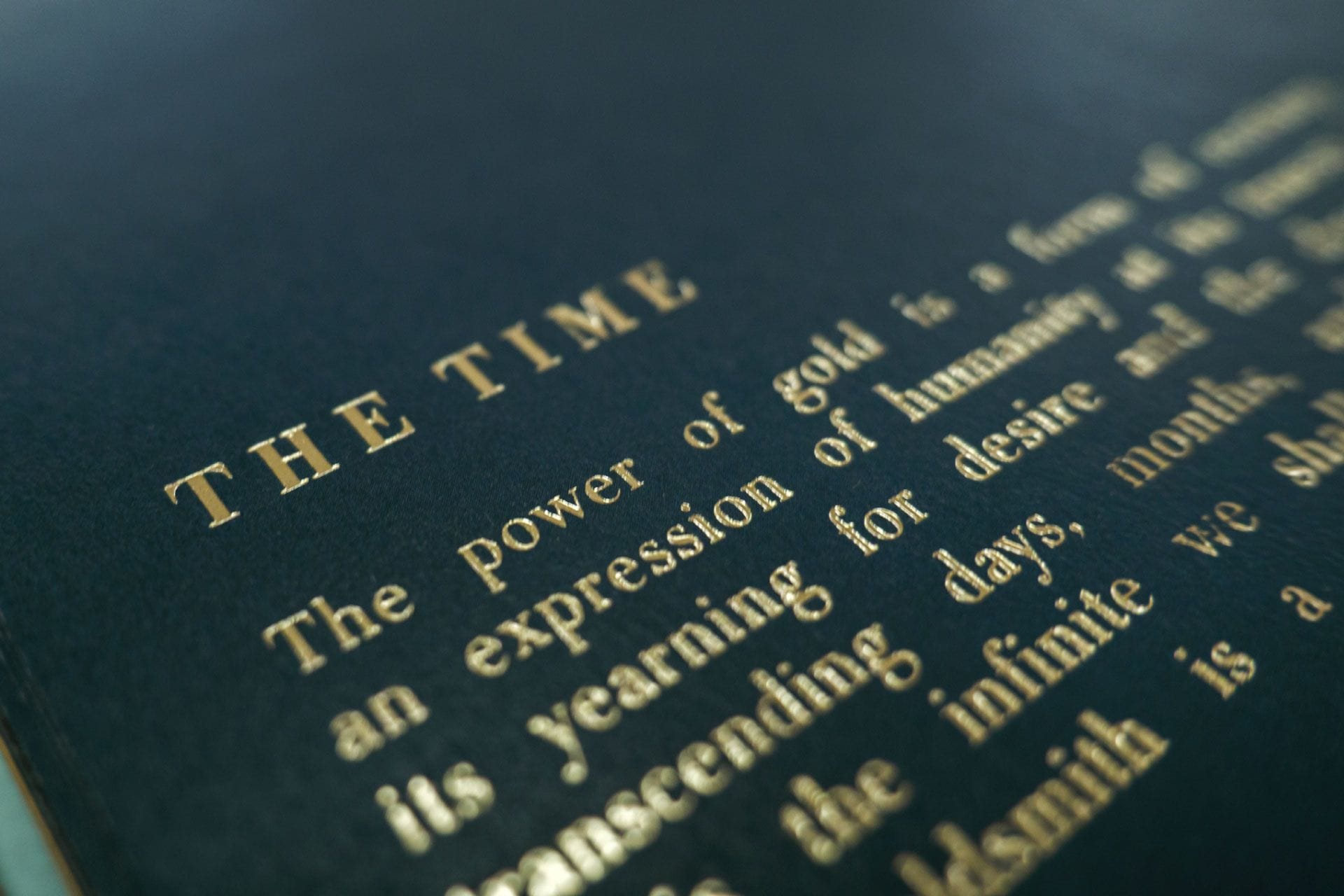
Touch. Simply touching an object increases the sense of owning it and the value attributed to it.6 The debossed cover and the raised, glossy gold foil, a surface people instinctively prefer,5 invite the reader to touch before reading, as a client handles an engraved frame.
The hand that made it. Products presented as handmade are perceived as carrying the maker’s care, and are preferred, especially as gifts.7 A book printed and bound by hand says, through its making, what its text says in words.
Story. People process brands partly as narratives, and a story that absorbs the reader strengthens the bond and lowers critical resistance.89 The fairy tale is a form most readers have known since childhood.
A project without the machine
No artificial intelligence was used at any stage: not in research, writing, illustration or layout. The design rests entirely on epistemological and cultural associations, on what each material, gesture and image means to a person and to a community. In other projects we use AI where it speeds up work on large volumes of data. Here there was no volume to process: the value lay in interpretation and in time spent by hand.
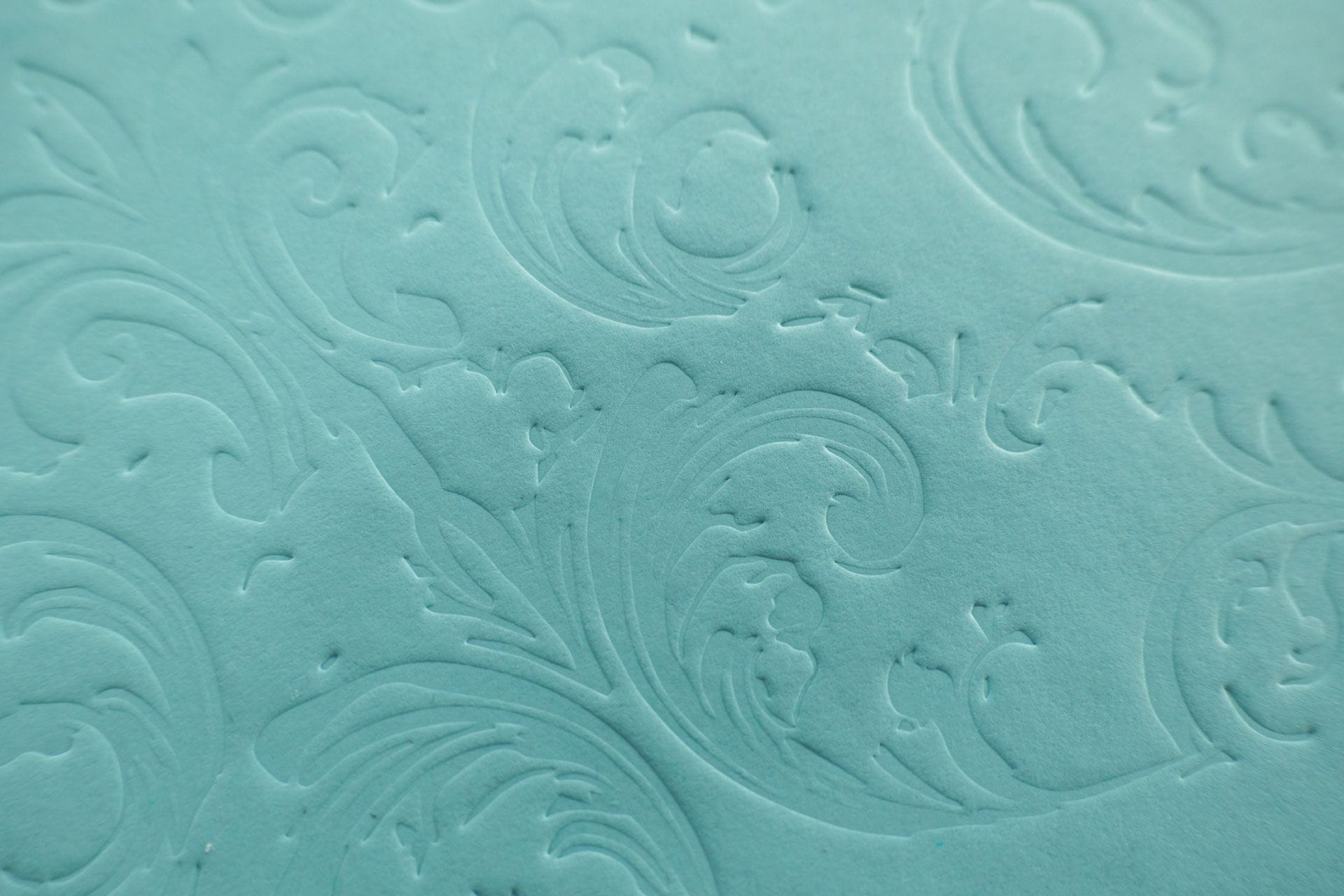
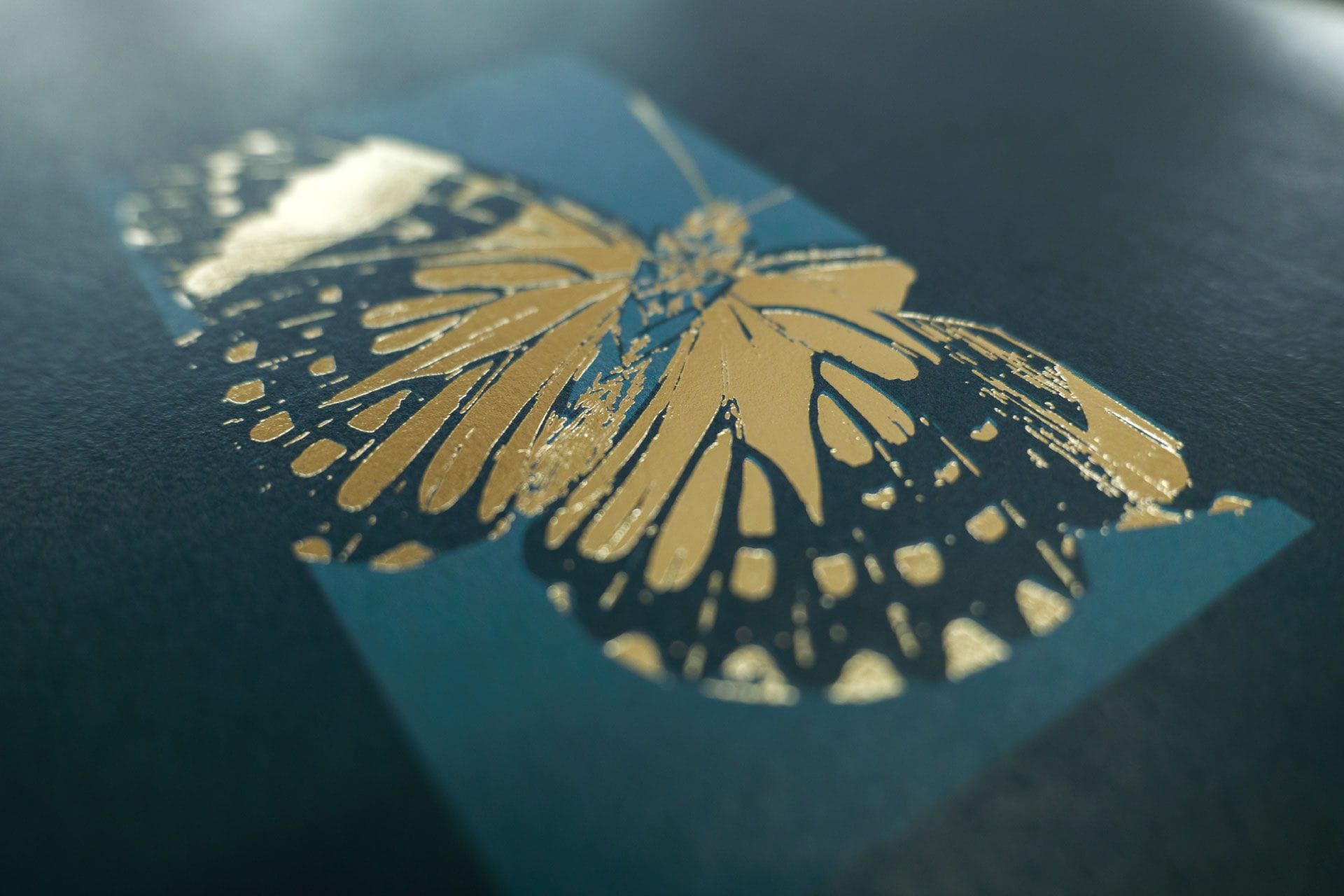
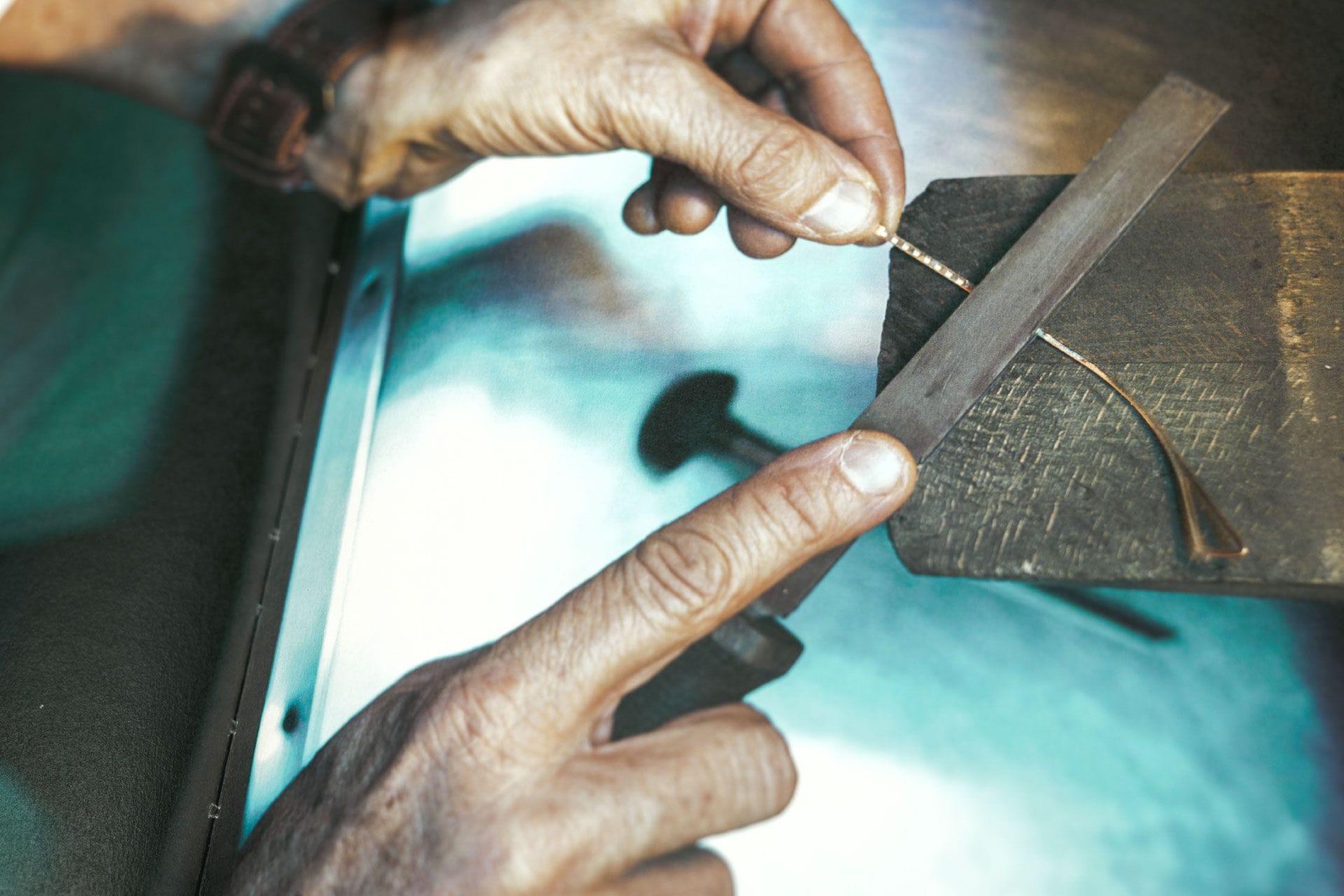


Photography: Youssef DaLima for Onymous Studios.
Where the project stands
The first edition was printed in 2025 by Stamperia Inchiostro Puro in Grugliasco, near Turin, the only printing house among those contacted that agreed to take on the job.1 The result is the object itself: we report no other outcomes, because none have been measured. The map remains a design hypothesis, and the next step is to test it: whether readers name the values after handling the book without being told, and whether it changes how clients perceive Novello’s pieces in the boutique.
Three rules we take into the next projects
Map before you make. Every stimulus gets a channel, an association and a value before production; a choice that serves no value is cut.
Let the object say what the text says. A book about time is made slowly; a book about gold is written in gold.
Keep the flaws. A portrait gains credibility from what it admits.
“A tale of bold dreams and patient hands that caress the threads of all that is invisible and eternal.” From the book.
Frequently asked questions
Why did you choose not to use AI?
Because there was no volume of data to process. The value lay in interpretation and in time spent by hand.
What is an association map?
A design tool that links each stimulus to a sense, to the meanings it evokes and to the value it should carry.
Can the method apply to other luxury objects?
Yes. Any object whose value lies in meaning, material and time: a collection, a space, a ritual of service.
Project card. Client: Roberto Novello · Object: The Hidden Thread, hand-printed art book · A Siderius project with Onymous Studios · Art direction: Onymous Studios · Design, editing and illustrations: Ludovica Corponi · Photography: Youssef DaLima · Graphic design: Ilaria Miotto · Printing: Stamperia Inchiostro Puro, Grugliasco (TO) · Year: 2025
An object that says who you are. Tell us about your project: innovation@adsiderius.com
Siderius S.r.l. Società Benefit · Via Roma 50, 36070 Trissino (VI), Italy · adsiderius.com
Sources and references
- Onymous Studios (2025). The Hidden Thread: a fairytale. Project page. onymous.it
- Lynn, M. (1991). Scarcity effects on value: A quantitative review of the commodity theory literature. Psychology & Marketing, 8(1), 43–57. doi.org/10.1002/mar.4220080105
- Morhart, F., Malär, L., Guèvremont, A., Girardin, F., Grohmann, B. (2015). Brand authenticity: An integrative framework and measurement scale. Journal of Consumer Psychology, 25(2), 200–218. doi.org/10.1016/j.jcps.2014.11.006
- Ein-Gar, D., Shiv, B., Tormala, Z. L. (2012). When Blemishing Leads to Blossoming: The Positive Effect of Negative Information. Journal of Consumer Research, 38(5), 846–859. doi.org/10.1086/660807
- Meert, K., Pandelaere, M., Patrick, V. M. (2014). Taking a shine to it: How the preference for glossy stems from an innate need for water. Journal of Consumer Psychology, 24(2), 195–206. doi.org/10.1016/j.jcps.2013.12.005
- Peck, J., Shu, S. B. (2009). The Effect of Mere Touch on Perceived Ownership. Journal of Consumer Research, 36(3), 434–447. doi.org/10.1086/598614
- Fuchs, C., Schreier, M., van Osselaer, S. M. J. (2015). The Handmade Effect: What’s Love Got to Do with It? Journal of Marketing, 79(2), 98–110. doi.org/10.1509/jm.14.0018
- Green, M. C., Brock, T. C. (2000). The role of transportation in the persuasiveness of public narratives. Journal of Personality and Social Psychology, 79(5), 701–721. doi.org/10.1037/0022-3514.79.5.701
- Escalas, J. E. (2004). Narrative Processing: Building Consumer Connections to Brands. Journal of Consumer Psychology, 14(1–2), 168–180. doi.org/10.1207/s15327663jcp1401&2_19

FlyOver: conquering the UK with an identity-led line
How to conquer a new European market with a line built on identity: six liqueurs designed and launched in the UK in three months. Research, design decisions, the role of AI, results.